by the AAUP–Penn Executive Committee
Penn is not only a school; it is also a workplace for over 40,000 people – including faculty, staff, postdoctoral researchers and instructors, graduate researchers and TAs, other student workers, healthcare employees, and subcontracted campus workers. What are the labor conditions of the tens of thousands of people whose work makes Penn work? That question concerns us all if we believe that a university should be a great place to work as well as to learn, and that workers deserve a voice in the place where they spend most of their time. As a faculty organization, AAUP–Penn advocates for the university workers employed in teaching and research, though our commitments don’t stop there.
AAUP–Penn is a membership-based organization that stands for shared governance of the University, fair working conditions, and community justice. We are Penn’s chapter of the American Association of University Professors, and we define faculty as broadly as possible to include everyone who teaches or does research regardless of rank or title. We came together in 2020 to reject the austerity measures that the Penn administration imposed (including budget cuts, staff layoffs, and hiring and PhD admissions freezes) at the start of the Covid pandemic and to call for more transparent institutional decision-making that gives us all a voice in decisions affecting our work and in policies affecting the city. Our key areas of current and recent focus include a Labor Solidarity Task Force to support the campaigns of organizing workers across job categories and to counter the administration’s anti-union messaging; housing justice, with a task force that recently focused on the struggle to save the University City Townhomes from demolition and 68 households from displacement; and the “Who Teaches at Penn?” project, which aims to answer an urgent and fundamental question about instructors’ terms of employment.
As one of 500+ local chapters of the AAUP (now partnered at the national level with the American Federation of Teachers), and as a member organization of Higher Ed Labor United (a coalition of 145 higher ed local unions and organizations representing over half a million workers and 300,000 students), AAUP–Penn is also part of a broader effort to build solidarity among academic workers across ranks and institutions. We are part of a movement that fights for debt-free, publicly funded college for all; equity and job security for the approximately 3 million people employed in higher ed; and against adjunctification, corporatization, defunding, reactionary political attacks, and the power of unelected boards of trustees. We are especially concerned about the rising trend of replacing stable faculty jobs with short-term, low-wage lecturer positions, and about the exploitation of adjuncts, lecturers, and other contingent, “non-standing,” or non-tenure-track faculty at Penn.
Adjunctification has reached crisis levels across higher education. The majority of those now teaching at U.S. colleges and universities are non-tenure-track: 3 in 5, according to the AAUP’s national research staff, and by some estimates closer to 70%. At the most basic level this means that most faculty have no job security. Like the mounting $1.8 trillion educational debt burden on students, this trend of replacing tenure-track positions with short-term contingent teaching contracts is largely the result of systematic defunding of higher education at the state and federal level. Only 8-15% of funding for public universities actually comes from the states those universities serve; the costs get passed on to students and cut out of instructional budgets in the form of downsizing of academic programs, layoffs, and outsourcing of teaching labor. But even at wealthy private institutions like Penn that can easily afford full-time faculty with fair pay and benefits, hiring adjuncts has been increasingly normalized over the past few decades. Adjunct appointments originated with the goal of allowing universities, on an exceptional basis, to hire someone already employed in another profession (say, a prominent lawyer or novelist) to teach a course without needing to join the regular faculty on a long-term basis or to meet the requirements for tenure. But this category is now much more often used as a loophole for filling basic teaching needs at low cost and turning academic employment into temp work.
At Penn, you may not always see the term “adjunct” used, but you will encounter contingent faculty—who are not eligible for the protections of tenure—teaching under a confusingly wide range of titles: most often “Lecturer” but sometimes even titles such as “Professor of Practice.” Some of these faculty have one-year contracts, others three-year contracts that are renewable; some have taught at Penn for decades. Others are paid per-course and may be teaching three language courses at Penn and two at another school, commuting between campuses without even an office where they can meet with students, and just barely making ends meet.
This casualization of academic labor is exploitative as well as harmful to teaching and research. AAUP–Penn sees it as a threat to the future of higher education broadly. It means that graduate students in many academic fields working toward PhDs have the slimmest chance of finding stable employment as professors. Many consequently face a choice between years of being overworked and underpaid or simply leaving the profession—at great cost to them, their students, and entire fields of study that are being casualized out of existence. It means that the majority of instructors at many institutions are shouldering heavy teaching loads for low pay, often with no healthcare or retirement benefits, no job security, and no say. A national study by AFT on adjunct faculty working conditions reports that a third of those surveyed earn less than $25,000 annually; more than half lack employer-provided health insurance; 40% struggle to cover basic costs of living, and nearly 25% have needed public assistance. Such precarious employment conditions are both a labor issue and an educational issue for the students and communities we serve. Overworked instructors and high levels of faculty turnover obviously impact teaching and advising. Our working conditions are students’ learning conditions.
Adjunctification also exacerbates existing inequities; it disproportionately impacts women and faculty of color. (To cite just one local example among many: in Penn’s School of Social Policy and Practice, which has a higher proportion of women faculty and faculty of color than most schools at Penn, 86.7% of instructors are contingent.) It raises issues of academic freedom too. The tenure system established by the AAUP national organization in 1915 was implemented to enable faculty (once they had earned job security through 6+ years of creditable teaching, research, and service) to teach and conduct research freely without the threat of being fired by powerful administrators or trustees for capricious or political reasons (a risk that is newly evident, for instance, in the wave of reactionary attacks on fields like gender and sexuality studies, Black studies, critical race theory, and history); lacking this protection, contingent faculty are implicitly not free to determine what they teach, say, or publish since they can be fired without due process for almost any reason. In addition, adjunctification erodes the already weakened structures of workplace democracy for faculty at all levels. Since non-tenure-track faculty are excluded from Penn’s Faculty Senate (an undemocratic policy AAUP–Penn has challenged), increasing the prevalence of contingent hiring diminishes the proportion of faculty who have even a limited voice in institutional decision-making.
Since Penn is one of just three universities that has declined to provide full data on the status and wages of non-tenure-track faculty to the U.S. Department of Education, it has been challenging to determine the ratio of contingent faculty who teach here or to calculate their average pay. If the University’s own “Facts” page is accurate in its headcount of “standing faculty” (tenure-track), “associated faculty” (non-tenure-track), and “academic support staff” (NTT faculty lecturers and senior lecturers whom AAUP believes are misclassified as staff), this means that approximately 61% of Penn’s instructional workforce is contingent. When a sizable proportion of those who teach here are excluded from the salary data Penn chooses to release, this consequently misrepresents tenure-track faculty salaries as typical. AAUP–Penn’s “Who Teaches at Penn?” task force has been collecting and analyzing data on working conditions, contracts, and pay for all Penn instructors and releasing some notable findings on social media: for instance, that faculty in programs including Urban Studies and Organizational Dynamics have not had a raise in over a decade. We are currently reviewing the results of our contingent faculty compensation survey, which has already found that the university pays lecturers grossly unequal wages for the same workload at the same rank (sometimes even within the same program); that some have workloads several times heavier than others with the same title; and that numerous respondents across programs have never once had a raise despite rampant inflation.
Our chapter fights for a better workplace, and some of our key campaigns focus on contingent instructors. All Penn employees deserve benefits including healthcare, family leave, and retirement, but adjunct lecturers who are paid on a per-course basis receive no benefits at all because they are misleadingly labeled “part-time”—even those who carry heavier teaching loads than full-time faculty. We think it is shameful that Penn could require anyone to work on campus during an ongoing pandemic without providing medical coverage if they get sick at work. And it is shameful that faculty or staff can devote decades of their lives to teaching at Penn without receiving retirement contributions from their employer, leaving them without the means to retire after many years of service. Through research, advocacy, and action, we aim to call attention to the unstable and unfair working conditions of contingent faculty, to shine a light on gendered and racial gaps in pay, promotion, and workload at all ranks, and to organize for more equitable conditions of employment for everyone.
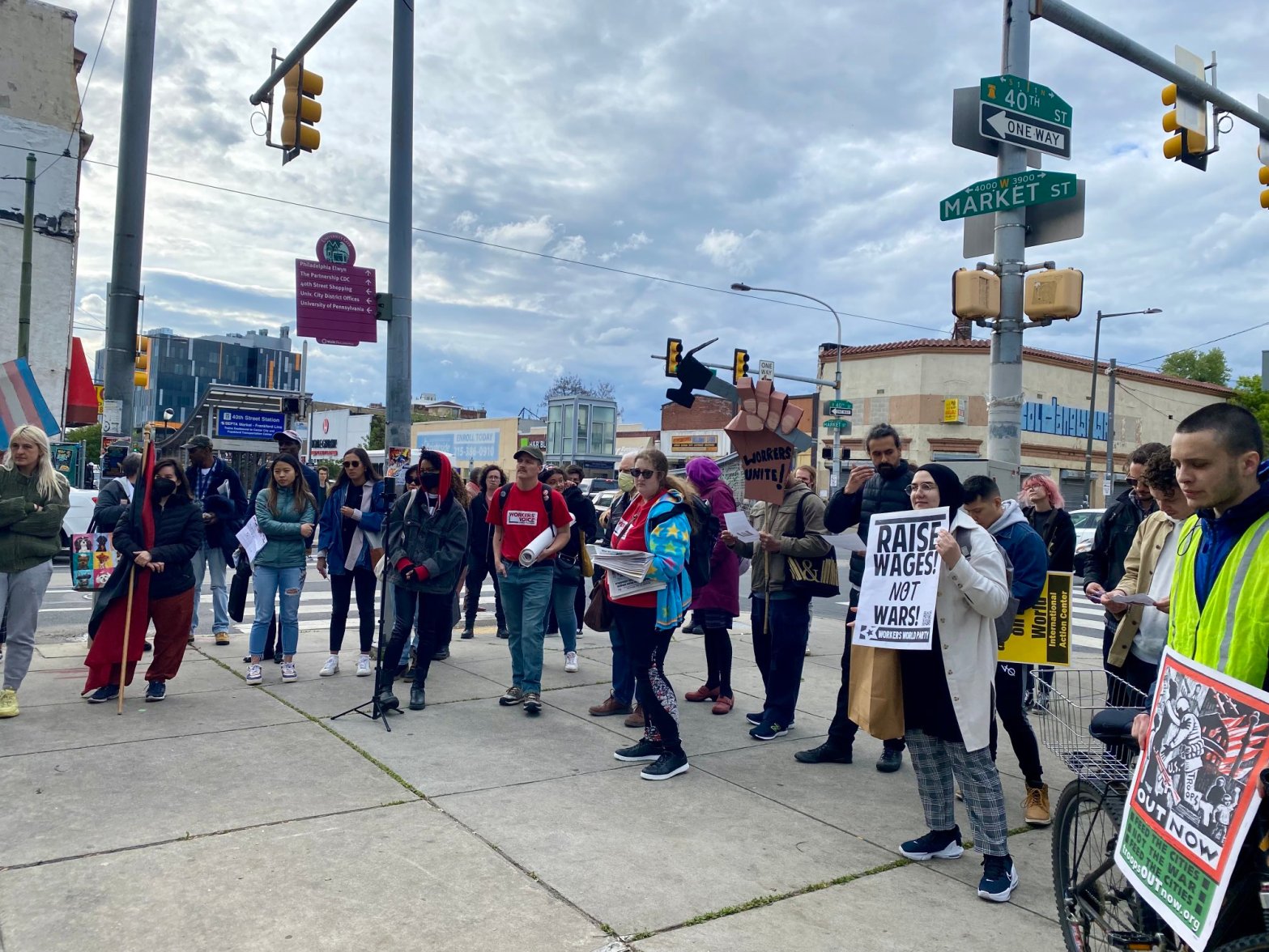
Our Labor Solidarity campaign aims to build ties with other campus employees and to support the recent organizing wave at Penn. In response to anti-union messaging from Provost’s Office, we delivered letters to the administration in early June 2023 urging them to take down their anti-union websites and to stop attempting to enlist faculty in anti-union campaigns against our students and coworkers in GET-UP and United RAs. The AAUP–Penn Labor Solidarity task force additionally created a guide for colleagues on How to Read an Anti-Union Website. Supporting our museum worker colleagues’ contract negotiations, our chapter called on Penn Museum management and on the administration in early June 2023 to agree to the wage proposals of Penn Museum Workers United, who are now celebrating their first contract after two years. Members of AAUP–Penn also stood with a coalition of frontline campus workers in Teamsters Local 115 and PSOU at rallies during the summer of 2022 in their victorious fight to end the two-tier wage system and earn equal pay for equal work, and we have rallied with GET-UP when they went public with their card campaign and have walked the picket line with local unions such as the Philadelphia Museum of Art Union, TUGSA, and Starbucks Workers United. We are proud to work on an increasingly unionized campus with members of unions including AFSCME DC47 Local 397 (Penn Museum Workers United); AFSCME DC47 Local 590 (Penn Library Workers); AFSCME DC47 Local 54 (Penn Dining Service Workers); CIR/SEIU (Penn Medicine Residents and Housestaff), GETUP–UAW (Graduate Student-Workers); IUOE Local 835 (Penn Facilities Workers); OPEIU Local 153 (United RAs at Penn), PSOU (Penn Security Officers Union); SEIU 32BJ (Allied Universal Security Officers); Teamsters Local 115 (Housekeeping, Grounds Workers, and Transportation); and Teamsters Local 929 (Bon Appetit Dining Workers). By contributing to strike funds, hosting Labor Solidarity Happy Hour meetups that bring together members of many Philadelphia unions, creating cross-union alliances, publicly supporting new organizing, and participating in direct action, we will continue to stand in solidarity with organized labor and to support workplace democracy on campus, in Philly, and everywhere.
Over the past three years, AAUP–Penn has also advocated for Covid mitigation measures on campus; rejected the unpaid extension of teaching time particularly for adjunct lecturers who teach the most; challenged the central administration’s unilateral decision-making and called for real shared governance; co-sponsored a proposal for equity in benefits for LGBT employees; advocated for visa and legal support for international employees and students and aid for displaced scholars; gathered data on the working conditions of everyone who teaches at Penn; stood with our neighbors fighting eviction from the last affordable housing in the area; and called for Penn’s accountability to the West Philly community and hosted teach-ins on racial justice in housing and education, including payment of PILOTs.
Anyone employed in teaching or research at Penn should join our chapter, including standing and contingent faculty, graduate student-workers, postdocs, research librarians, archivists, and technicians whose work is substantially involved in research and teaching. AAUP–Penn leadership includes contingent faculty and grad workers alongside tenure-track faculty. Students, staff, campus workers, and community members as well as faculty are welcome to contact us about issues and priorities for collective action at aaup.penn@gmail.com. To learn how to get involved, visit https://aaup-penn.org.
 Penn Disorientation Guide