Although the University has made progress in recognizing its role, there are still demands that should be met
By Anon
Penn and slavery had an undeniably intertwined relationship, in which both parties benefitted from the other. In 2017, a group of Penn undergraduates founded the Penn & Slavery Project to investigate Penn’s ties to slavery and scientific racism. The project has uncovered the likely use of slave labor on campus, faculty and students who owned enslaved persons, and Penn’s significant contribution to developing race science.

Penn’s use of enslaved laborers on campus
The original Penn campus was located Old City, Philadelphia. Robert Smith was hired by the university in 1751 as the “House Carpenter.” Smith was a member of the Carpenter’s Company, which allowed its members to use slave labor in construction. Robert Smith first started working for the school in 1751, and worked on construction projects in 1763 and 1774. Although it is unclear whether Smith paid slave labor fees while working on building’s specifically for Penn, Tax records showed Smith paid taxes on “2 Negroes” in 1769 and “1 Negro” in 1774.
Ebenezer Kinnersley, a white man who worked as Steward of the dormitory for the University, was the “principal collaborator” on Ben Franklin’s projects. Tax records and additional documents indicate that Kinnersly owned an enslaved man named Caeser during his time as Steward. The Daybook belonging to the Trustees of Penn show the college paid Kinnserly for “his Negro Services at the Academy in Ringing the Bell making Fires.” The University made continuous payments to Kinnersley for Caeser’s labor from 1757 to 1770.
Faculty and Student Ownership of Enslaved Persons
At least 75 of the former University’s trustees owned enslaved persons. This includes William Smith, who was the University’s first Provost. The medical school’s first faculty member John Morgan owned enslaved persons and traveled to Jamaica to fundraise from prominent slaveholding families. In the Quadrangle Dromitory (The Quad), 10 out of the 39 Residential houses are named after enslavers who gave funding to the university, including Thomas Penn, the son of William Penn.
The majority of Penn’s early medical school graduates came from southern, slave-owning families. The Medical School actively recruited from wealthy plantation families across the American South, as well as the Caribbean. Many of the graduates from the Medical School returned to the South where they founded new medical schools where they taught about plantation and race medicine. This included performing invasive and dangerous surgeries on unconsenting enslaved persons.
Penn’s Contribution Constitutional Slavery
Penn faculty and alumni were actively involved in adding pro-slavery sentiments to the Constitution. James Wilson, the founder of the Penn Law School, was one of the main framers of the Constitution, and proposed the three-fifths compromise. Alumnus and Professor Hugh Williamson was a significant prominent of the three-fifths compromise and was instrumental in its inclusion.
Penn’s Contribution to Scientific Racism
Although most 19th century medical schools taught a form of anatomy that emphasized the difference between white and Black bodies, Penn’s national influence on scientific racism was particularly distinct.
As stated earlier, many southern students of Penn’s medical school returned to the south after graduating, where they would work as plantation physicians, and conduct experiments on enslaved people, without their consent.
Benjamin Rush, who served as the predecessor of race science at Penn, was a prominent professor in the medical school. Rush spread the concept that race was rooted in biological differences, writing that black skin was a result of leprosy, and that black people had a “morbid insensibility” to pain.
Alum Josiah Nott published multiple lectures on interracial mixing, arguing that human races are “distinct and immutable,” and therefore incompatible. In one paper Nott stated “the Mulattos are intermediate in intelligence (and)… less capable of endurance than whites or blacks.”

Samuel Morton was a Penn alum and professor of anatomy and ethnology at the Medical School. Building on Rush’s initial teachings of race theory, Morton taught entire courses on racial differences. During the 1830s and 1840s, Morton collected crania (skulls) to use in research. At the end of his life, Morton had collected 867 human skulls, all labeled according to ethnicity.
54 of the 84 skulls Morton labeled as “Native African” came from the Vedado Plantation in Cuba. The majority of the crania were adolescents and adults, who died from diseases contracted during the journey across the Atlantic or in the New World. Other “Native African” skulls came from Liberia when the US was actively colonizing the region. Morton himself had several connections with influential members of the American Colonization Society. 11 out of 15 of these crania showed signs of violent trauma. Heads of Indigenous Americans and Mexican Soldiers who died in combat were also sent to Morton from various contacts.
In 1839, Morton published “Crania Americana” while a professor at the medical school. The work supports polygenesis, and divides mankind into five races, ranked by intellectual capacity. It quickly became the leading text on racial differences in the United States, and was cited as evidence that those of European ancestry were superior to all other races. Morton’s work would be used by Confederates in the South to assert slavery was natural for black people. Nazis also used Morton’s findings as evidence to support their race science.
In 1966, The Penn Museum acquired the Morton Collection from the Academy of Natural Sciences of Philadelphia. In the museum, the skulls were put on display, and used as a resource for Penn students and visiting researchers.
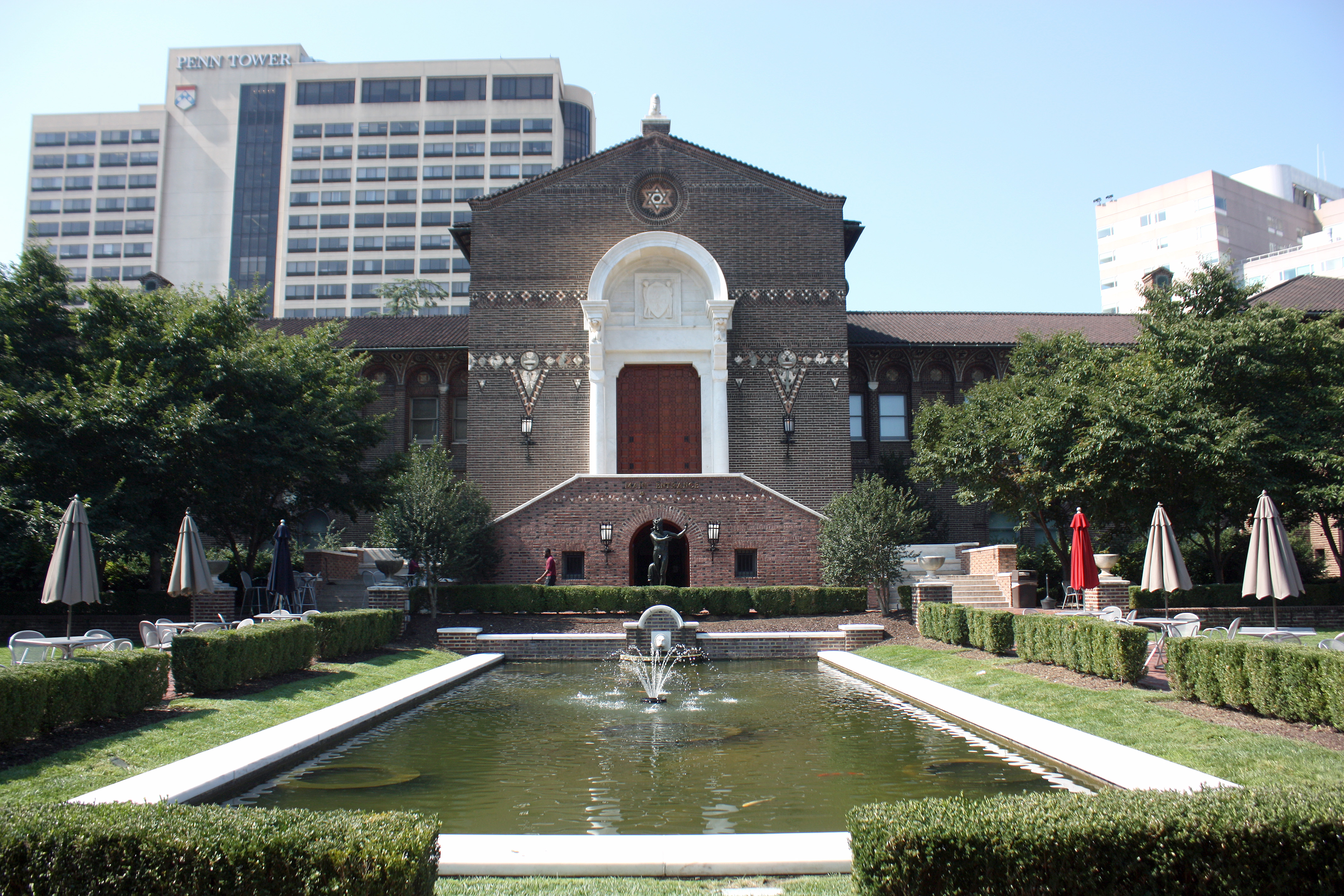
The Penn Museum’s page about the collection, written in part by Janet Monge, takes an apologist tone in discussing Morton’s work and the Museum’s use of the collection (See: MOVE Article). The page states “There was no evidence to suggest that Morton’s personal beliefs had led him to racially bias his data. He studied the crania he had at hand objectively and scientifically and reported his findings as such.” Of differences between races, the page says “even today [they] are surrounded in layers and layers of interpretation.” The page praises Morton, as his “success in collecting crania is particularly remarkable” in part due to “loyal friends,” despite acknowledging some of the gruesome ways the skulls were obtained.
In 2020, the Museum relocated the collection to storage and formed a committee to decide what to do with the collection. In April 2021, the Museum apologized for harm caused by the Morton Collection and vowed to begin a transparent repatriation process of all the crania in the collection. The last update is from December 2021, in which the Morton Cranial Collection Community Advisory Group made recommendations concerning the burial and commemoration of the Black Philadelphians whose cranial remains are part of the Morton Collection. Although the Museum has made some progress, the demands of Police Free Penn still include:
- Initiate a process of repatriation and/or community-led interment of all remains in the collection, and make public all previous repatriation requests submitted to the Museum regarding the Collection.
- Create a dedicated, full-time staff position to work on the repatriation process of all remains and an advisory council inclusive of students and members of Philadelphia’s Black/African-descendant, Indigenous, Latinx, and Asian communities.
- If contact cannot be made with direct Black/African-descendant communities, heed the demand of West Philly activist Abdul-Aliy Muhammad to release the remains of Black/African persons to local Black spiritual communities who can determine the appropriate way to inter the remains.
- Publicly apologize for the harm to Black/African-descendant, Indigenous, Latinx, and Asian communities inflicted by the Museum’s continued use of the Morton Collection as a “teaching tool.”
- Add a disclaimer to all sections of the Museum website addressing the Morton Collection that includes a statement acknowledging the harm done to Black/African-descendant, Indigenous, Latinx, and Asian communities by the Morton Collection and its continued use.
- Specifically address the harm the Collection has done to Black/African-descendant communities through the unethical acquisition of the crania of enslaved people; in the development of scientific racism to justify slavery; and in its ongoing display and utilization for research at the University of Pennsylvania in the historically Black neighborhood of West Philadelphia.
- End the use of data sourced from the collection without consent and remove all images from the Museum’s digital footprint that represent the deceased without consent.
Campus Policing | Table of Contents | PILOTs
 Penn Disorientation Guide