By the Penn Slavery Project
In 2016, Penn spokesman Ron Ozio claimed in the Philly Tribune that there were no traces of slavery in Penn’s DNA.
This was a lie, and one that must be addressed further and more meaningfully by Penn.
Since fall 2017, the Penn & Slavery Project has exposed the various ways that Penn, its trustees and its students benefitted from slavery and the slave trade. Reports have illustrated both the ways in which Penn benefitted from slavery, and, notably, the ways in which the institution of American slavery benefitted from Penn. Early campus buildings in Old City were likely constructed at least partially by enslaved laborers under the Carpenter Company, and the University heavily recruited wealthy Southern students whose affluence came from owning enslaved people from the late eighteenth century onwards.
Students and faculty at the University directly benefited from the labor of enslaved people as well. Ebenezer Kinnsersly enslaved a man named Caesar, who cleaned dormitories, lit fires and rang the bell for classes to begin. At this time, there are no formal monuments to Caesar or the other unknown enslaved people who constructed and maintained early Penn.
Additionally, graduates of Penn’s medical school returned to the South, where they often became plantation physicians. Their Penn degrees provided them with professional legitimacy, even authorizing them to conduct experiments on enslaved people, as alumni such as John Mettauer did. Moreover, Penn doctors and professors contributed considerably to early race science, which was used to justify slavery and colonialism. With early race science theorists such as Benjamin Rush as professors, Penn quickly became the epicenter of American race science, graduating physicians such as Josiah Nott and Charles Caldwelll who became outspoken advocates for slavery and the notion of biological white supremacy.
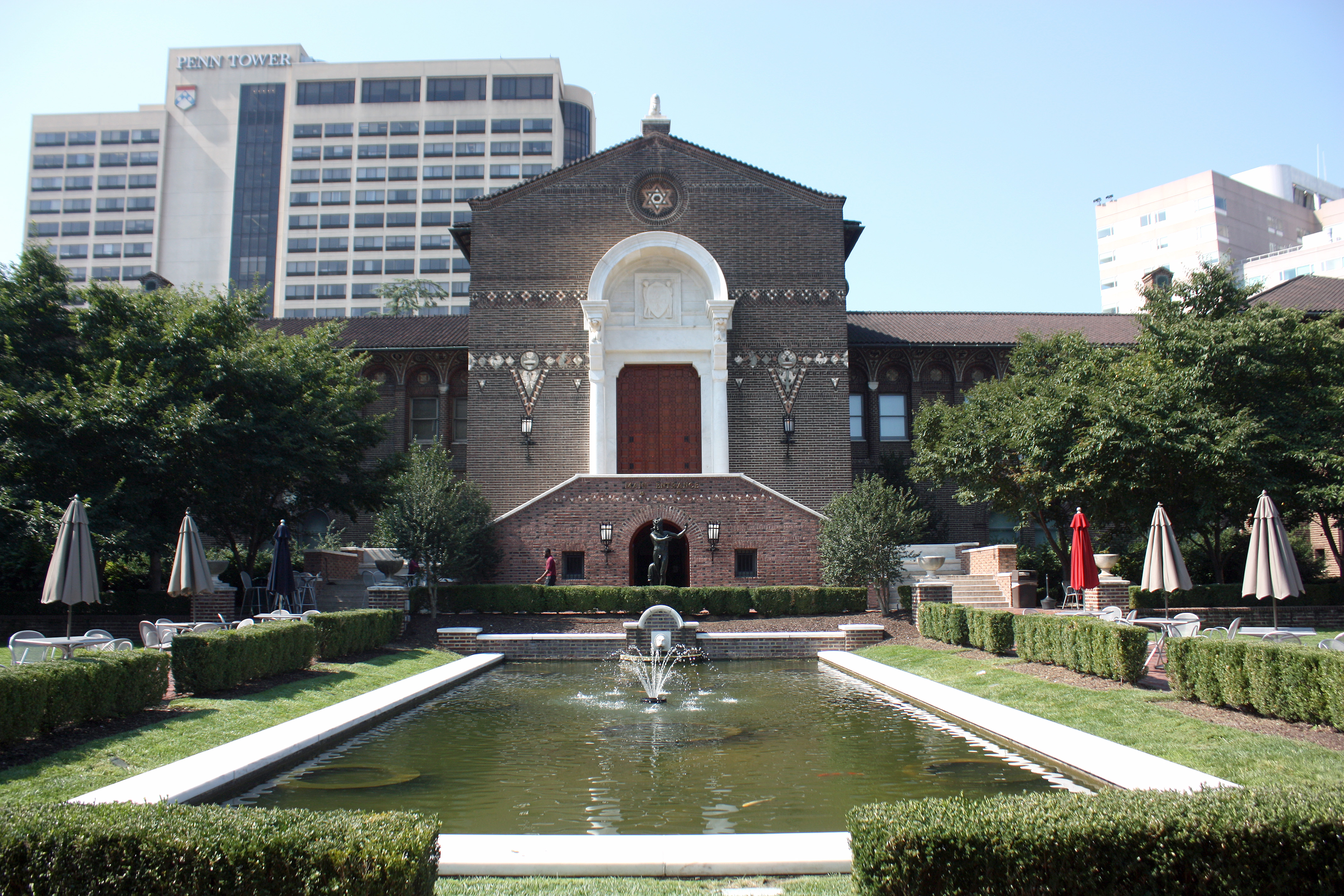
Perhaps most notably, the persistence of the Morton Cranial Collection illustrates the degree to which these harms remain an integral part of the University. Known colloquially as the Morton Collection, the cranial collection is a collection of human skulls currently housed in the Penn Museum. Assembled by the godfather of race science, Samuel Morton, the collection comprises about 1,200 human skulls from nearly every corner of the world. Morton leveraged colonial networks and the infrastructure of the slave trade to source remains as he built his collection from 1830 until his death in 1851.
Morton then measured the physical features of the skulls, and argued that they corresponded to personality traits and intelligence, which he ranked in a racial hierarchy. His findings were used to justify American slavery and racial inequality, arguments that would later be taken up by Nazi Germany. It has since been discovered that Morton’s collection was at least partially inspired by his desire to refute abolitionism through a supposedly scientific lens. 1
There are 84 skulls in the collection belonging to people of African descent. The vast majority came from the Vedado Plantation in Cuba. These enslaved people were mostly young adults, who died shortly after surviving the Middle Passage. After death, their bodies were exhumed from a mass grave, beheaded, and shipped to Morton. Others were sent to him from American colonial enterprises in Liberia.2 These are the bones of ancestors, which the Penn Museum continues to house and claim ownership over.
In fact, the Museum takes pride in the Morton Collection, which it acquired in 1966 from the Academy of Natural Sciences of Philadelphia. Over the past few decades, the Museum has attempted to frame the Morton Collection as a valuable “data set,” offering the collection as a resource to Penn students and visiting scholars while maintaining an online database that is available to researchers all over the world.
As recently as 2020, the majority of the collection was displayed in a Museum classroom, constructed in 2014 for the purpose of displaying the crania, where they were housed with little context. Students and visitors were often taken to see it without consent. In August 2020, because of the work of local Philly activists and Penn-affiliated groups like The Penn & Slavery Project and PoliceFreePenn, the Museum committed to removing the Collection from open storage.
However, this is the smallest step they can take. The time has come to deaccession the entire Morton collection and, where possible, repatriate its contents to the Black/African-descendant, Indigenous, Latinx, and Asian communities from which the collection’s remains were taken. Every day that the Museum holds this collection is another day they claim ownership over the bodies of ancestors.
These are the demands of Police Free Penn pertaining to the Collection:
- Publicly commit to dismantling the entire Morton Collection and update the Museum website to reflect this decision.
- Initiate a process of repatriation and/or community-led interment of all remains in the collection, and make public all previous repatriation requests submitted to the Museum regarding the Collection.
- Create a dedicated, full-time staff position to work on the repatriation process of all remains and an advisory council inclusive of students and members of Philadelphia’s Black/African-descendant, Indigenous, Latinx, and Asian communities.
- If contact cannot be made with direct Black/African-descendant communities, heed the demand of West Philly activist Abdul-Aliy Muhammad to release the remains of Black/African persons to local Black spiritual communities who can determine the appropriate way to inter the remains.
- Publicly apologize for the harm to Black/African-descendant, Indigenous, Latinx, and Asian communities inflicted by the Museum’s continued use of the Morton Collection as a “teaching tool.”
- Add a disclaimer to all sections of the Museum website addressing the Morton Collection that includes a statement acknowledging the harm done to Black/African-descendant, Indigenous, Latinx, and Asian communities by the Morton Collection and its continued use.
- Specifically address the harm the Collection has done to Black/African-descendant communities through the unethical acquisition of the crania of enslaved people; in the development of scientific racism to justify slavery; and in its ongoing display and utilization for research at the University of Pennsylvania in the historically Black neighborhood of West Philadelphia.
- End the use of data sourced from the collection without consent and remove all images from the Museum’s digital footprint that represent the deceased without consent.
- Mitchell, P.W. and Michael, J.S. (2019). “Bias, Brains, and Skulls Tracing the Legacy of Scientific Racism in the Nineteenth-Century Works of Samuel George Morton and Friedrich Tiedemann” In Jackson, Christina, and Thomas, Jamie (eds.). Embodied Difference: Divergent Bodies in Public.
- https://www-jstor-org.proxy.library.upenn.edu/stable/43997027?pq-origsite=summon&seq=1#metadata_info_tab_contents
Police Free Penn | Table of Contents | Penn and the Climate Crisis
 Penn Disorientation Guide