By Sam Samore and Nico Millman, GET-UP members
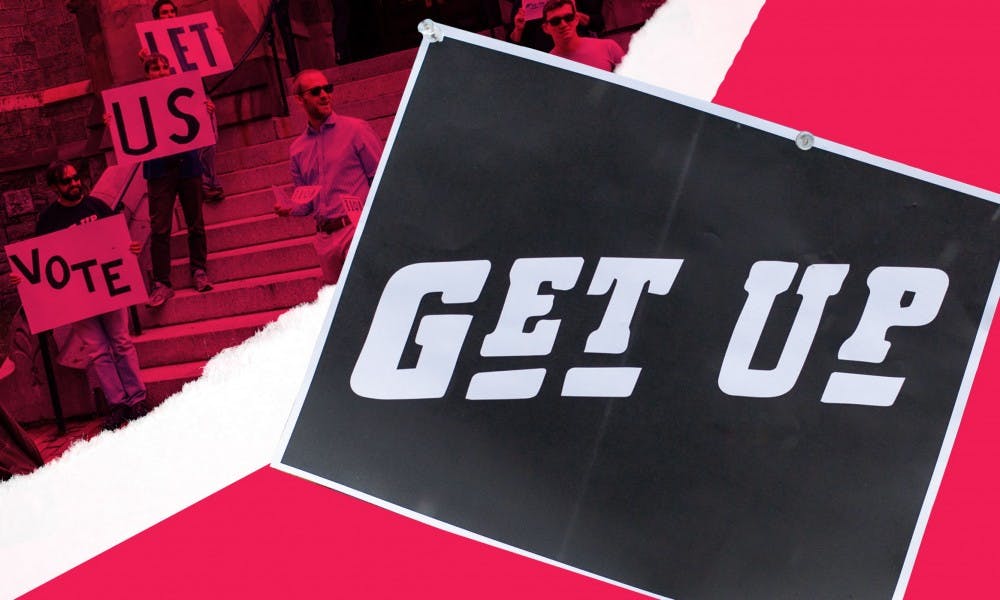
Much of the teaching, research, and event programming labor that is essential to life at Penn is done by graduate students. However, the University administration does not recognize us as workers. Without a union or a contract, we remain vulnerable to various forms of workplace exploitation. This includes insufficient healthcare coverage, significant gaps in our funding, the absence of workers comp, susceptibility to sexual or other forms of abuse, and more.
The movement for graduate students to be recognized as workers through unionization has a long history at Penn. GET-UP (Graduate Employees Together at the University of Pennsylvania), the name of our organization, began in earnest over a decade ago. Rulings by the federal National Labor Relations Board (NLRB) blocked the original drive for unionization. A change in ruling in 2016 enabled organizers to revive GET UP, and we launched an election campaign in 2017 to unionize for workplace democracy. Unfortunately, due to obstacles introduced by a Trump-appointed NLRB committee, which opposed graduate labor unionization at private universities, we were left with little choice but to withdraw from the election drive.
Despite obstacles posed by the NLRB board under Trump, GET-UP coordinated a variety of actions to push for change on campus. Some include campaigns for a change in Delayed Payments (the belated disbursal of stipends for first-year doctoral students); and collaborations with the Coalition Against Sexual Misconduct (CASM) at Penn, a graduate-led advocacy group pushing the administration to change a rampant culture of harassment that exists across schools and departments. Since Biden’s election, changes to the NLRB board have made a more favorable environment for graduate worker organizing.
We are inspired by the grad workers at several of Penn’s peer institutions who have recently won significant workplace improvements through unionization. For instance, grad workers at Brown University won COVID-related funding extensions, financial relief for grad-worker parents, and a grievance procedure with remedial measures outside of Title IX. At NYU, grad workers recently went on strike in order to win an immediate pay raise and yearly raises to address cost-of-living increases, as well as mandatory sanctuary protections from ICE and other government agencies for all NYU community members. At Harvard, the grad union recently won a pay raise, protection against discrimination for reporting harassment, and protections for immigrant and international student workers. Those are the kinds of things that grad workers can win when they organize together: better pay, increased dignity, and a more just campus community.
However, despite the benefits of unionization for both graduate workers and the wider Penn community, the Penn administration often fights against its workers’ efforts to unionize. After years of organizing, workers at the Penn Museum of Archaeology and Anthropology are in the middle of a union election, and the museum leadership has been doggedly circulating false information about unions to discourage employees from voting yes, including a video message from the museum’s new director, Chris Woods, begging employees to vote no on a union. During GET-UP’s 2017 unionization drive, the Penn administration used similar tactics, spreading false information wherever they could. Unions at Penn benefit everyone, but we still have to fight for them.
We are committed to organizing and fighting for better working and living conditions through a range of tactics, including collective action, political education, focused campaigns, and solidarity work. We welcome anyone, including undergraduate students, to contact us as we move into the 2021-22 academic year. Together, we can organize for justice.
You can reach GET-UP at penngetup@gmail.com.
Penn and Puerto Rico | Table of Contents | Penn and Philadelphia Public Schools
 Penn Disorientation Guide