by the DG Editors
Hopefully, now at the end of this guide, you have a clearer understanding of Penn as an institution and how it has had an impact on its own students and staff, the Philadelphia community, and the world. You’ve seen how Penn’s foundation was built on the displacing of indigenous peoples and the use of enslaved labor, how it exploits its workers today, how it fails to meet the needs of its students, how it intensifies racial inequalities, and how it deprives us all of an environmentally sound future.
All these issues are connected and can be explained by the University’s unspoken ethos: profit over people. As Liz Magill enters her second year as president, she upholds Penn’s destructive and harmful status quo. Penn’s multi-billion dollar endowment continues to swell, board members keep making millions, and the University funnels students into the corporate world post-graduation (see: White Collar Crime). The rich grow richer because of how they squeeze the working class for every last cent. The outcome? Less resources for low-income students, chronic underfunding and understaffing of vital programs and departments that are already stretched thin, acceleration of climate destruction, and violent police enforcing the displacement of West Philly residents, all to prevent even the smallest dent in their bottom line.
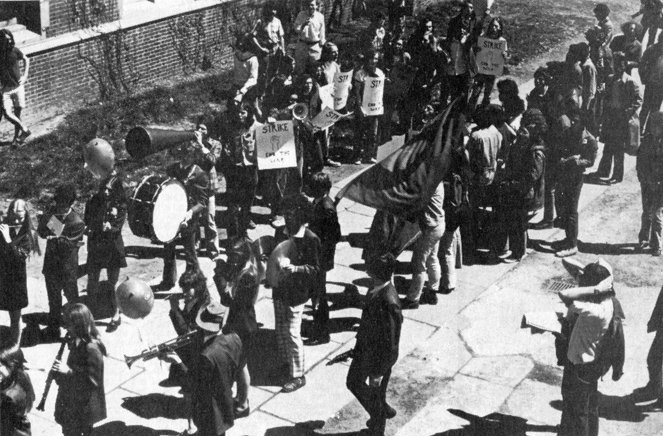
Penn tries to mask the harm they perpetuate with heartfelt messages that seem to sympathize with our calls for action, but they ultimately fall short of making real change. We urge you not to fall for the flowery language of Penn’s PR machine and not to compromise your demands for justice. Articles in this guide detail how organized, undeterred campus activism results in productive change and has done so in Penn’s past. It was the hard work of students, faculty, and staff that created the cultural houses, the Asian American Studies program as well as multiple other programs and resources that students use to this day (see: Cultural Houses, Cultural and Ethnic Studies). More recently, campus activism led to partial wins toward reparations for the Morton Collection, demands for the University to pay PILOTs, and the partial preservation of the UC Townhomes (see: Slavery at Penn, PILOTs, UC Townhomes). We hope that, rather than being demoralized by Penn’s lengthy list of faults recorded in these articles, the DG inspires you to partake in collective action, and that the resources you can find at the end of this guide help you with your efforts. In the wise words of activist Mariame Kaba…“let this radicalize you rather than lead you to despair.”
Through organizing and solidarity, we will win. All power to the people!
Help us share this guide and spread the word:
- Send penndisorientation.com to a friend
- Share our posts on Instagram
- Hand out DG materials at your event—you can contact us for flyers at penndisorientation@gmail.com (or @upenndg on IG)
 Penn Disorientation Guide