by Anonymous, updated 2025
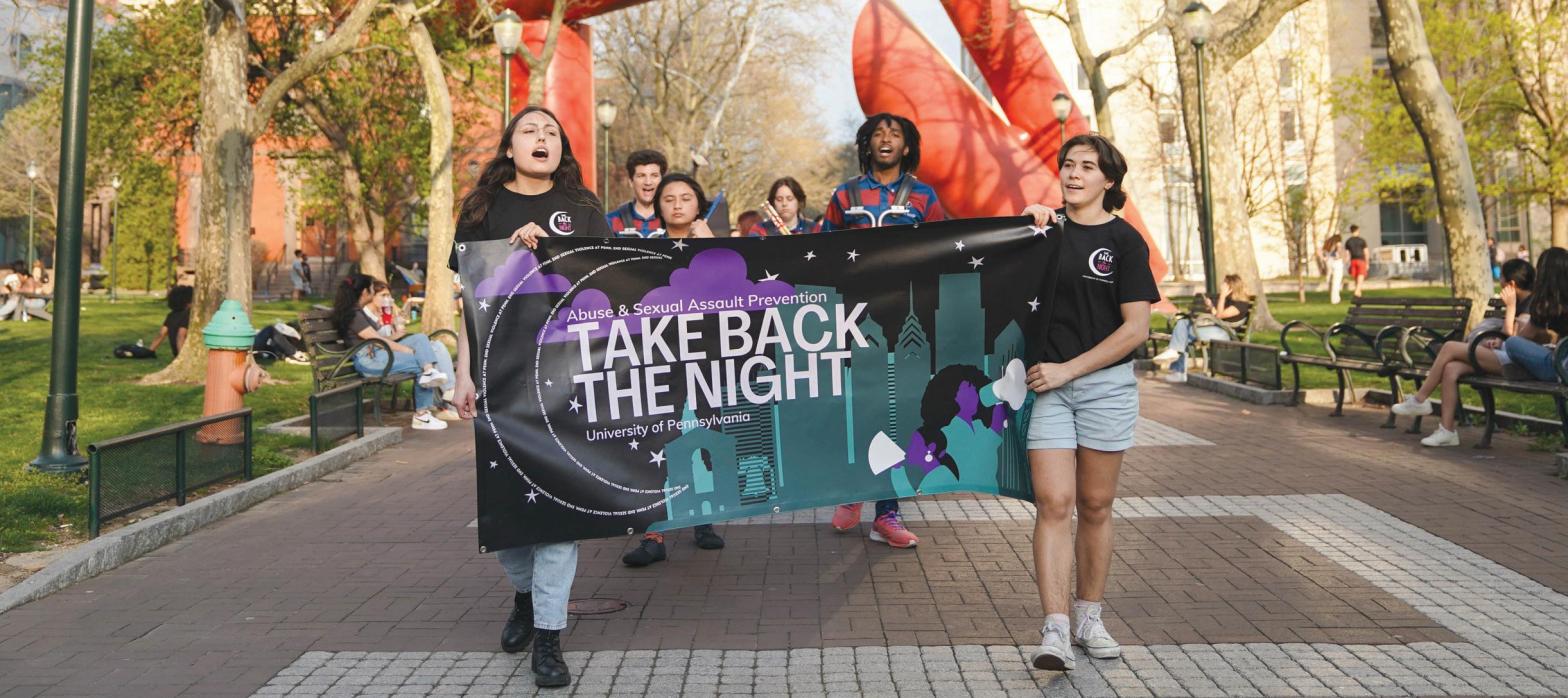
In April 2025, Penn’s Abuse and Sexual Assault Prevention (ASAP) organized their annual Take Back the Night, which is part of an international campaign against interpersonal and sexual violence. This year, Take Back the Night included awareness events and a rally and march around campus, followed by a survivor speak-out and candlelight vigil. They hosted speakers from Penn as well as the Philadelphia community, including representatives of Philadelphia Center Against Sexual Violence, Philly’s only full-service rape crisis center. This transformative event spread awareness of sexual violence on campus while empowering survivors to reclaim their voices. However, beyond this annual event, Penn has implemented limited measures to combat sexual violence and create a safe campus community. While events such as Take Back the Night are effective at raising awareness, more transparent policies, prevention education, and accessible resources are crucial to tackling the issue of sexual assault at its core.
Unfortunately, like most universities, Penn has a poor record of supporting survivors of sexual assault. The resources intended to support survivors are often understaffed and struggle to function under the constraints of Penn’s rules. The many Greek houses that line Locust Walk make walking through campus a distressing experience for survivors, and it means that at most parties they are looking over their shoulders (see: How Frats Get Away With Shit). When individuals do try to hold perpetrators of harm accountable, they are often left retraumatized and unsatisfied.
Part of the difficulty of centering survivors comes from the national restrictions of a constantly changing Title IX policy. Title IX aims to prevent sex-based discrimination, but since it is a federal statute implemented by the U.S. Department of Education, the way it is enforced often shifts under each U.S. presidency. Penn’s current Title IX officer, Michele Rovinsky-Mayer, is a lawyer first and foremost. It is her job to ensure that perpetrators of violence are innocent until proven guilty. If they have been found guilty, punishments within the Penn system are lackluster at most—survivors are lucky if the person who harmed them is prohibited from being in the same common spaces as them or if their classes are moved around so they can avoid the perpetrator. In recent years, the Penn Association for Gender Equity (PAGE) board attempted to make the form to report misconduct less triggering and easier to navigate. Meetings with Rovinsky-Mayer proved futile, and the form remains mostly unchanged. With all of this background, it is no wonder survivors (especially students of marginalized communities) find it extremely difficult and disheartening to report instances of sexual violence.
Beyond the intricacies of Title IX as a national mandate, many facets of our college perpetuate rape culture. Most of Penn’s Greek life is dominated by fraternities that have a long history of getting away with all types of violence. In 2020, fraternity members at the Interfraternity Council (IFC) meeting discussed rebranding their “sexual assault image” and then promptly moved on to debating beer pong policies. According to the 2019 Association of American Universities (AAU) Campus Climate survey, fraternities are the second most common location of sexual assault (the first being dormitories). Psi Upsilon, otherwise known as Castle, is a saddening example of evasion of accountability. In 1990, they were expelled from their “castle” on Locust right behind the love sign after kidnapping and assaulting a student. Ten years later they returned to campus. Then only two years ago, yet another student was assaulted at Castle, allegedly due to racial motivations. Despite a week of student protests that followed, no changes were made nor the students’ demands met. In January 2023 the student was found not guilty for the alleged physical assault and harassment. However, many continue to question this legal decision.
Additionally, the recent alleged sexual misconduct from the former Counseling and Psychological Services Director further raises questions about Penn’s commitment to providing safe and trustworthy resources to students. This incident has not helped the already little trust that many students have in CAPS. Penn’s silence in situations such as this one further demonstrates how sexual violence is an issue that Penn continues to brush under the rug.
There are individuals, groups, and resources working to make campus safer and more supportive of survivors, but they are fighting an uphill battle. Groups like the Abuse and Sexual Assault Prevention (ASAP) educate the community about sexual violence. Other groups like the Coalition Against Fraternity Sexual Assault (CAFSA) advocated for survivors through protests and meetings with administration. However, CAFSA experienced threats and toxicity when it was first created in 2019 and was extremely understaffed, eventually leading to a shut down. ASAP struggled to stay afloat during the pandemic and has only recently revitalized their work in earnest. All in all, there are not enough people standing up for survivors at Penn to keep these groups productive and thriving without leaving students burnt out.
There is a similar problem at Penn Violence Prevention (PVP), the student resource center intended to “engage the Penn community in the prevention of sexual violence, relationship violence, stalking, and sexual harassment on campus.” PVP (and Penn student resource centers in general) are known for frequent staff turnover, arguably because of the lack of support they receive from the university. According to a Penn Anti-Violence Educator (PAVE students are employed by the University and work under PVP to give bystander intervention trainings to student groups), training has been “disorganized and disheartening” and PAVE staff are stretched too thin.
“With so many staff members leaving and being replaced in recent years, it is hard to have faith in the system,” they continued. “In 2019 we kind of made Consent Circles for incoming Freshmen mandatory. Although that was an overall win, Penn administrators wanted us to educate an entire incoming class with the same number of trained educators”.
The Restorative Practices at Penn (RP@P) office aims to “promote healing, accountability, and community building.” As an extension of that mission, they attempt to circumvent cancel culture while also centering survivors. Although their intention is noble, the office is still very new and may not always function effectively as a result. None of this is to say PVP and RP@P are not helpful to many students. The conditions at PVP and RP@P are a reflection of the conditions of many student resources at Penn: the University does not give them enough assistance to fix chronic problems such as understaffing, which in turn means they cannot provide consistent, helpful support for the number of students that need it (see: Confidential Resources).
It is difficult to be a survivor, not just at Penn, but in society more broadly; Penn is simply a microcosm of that reality. Groups like ASAP need more student support, and resources like PVP and RP@P need more financial and institutional support in order to improve the environment for survivors. Penn must prioritize survivors and minority students instead of its wealth and reputation. Individual perpetrators and fraternities collectively need to face accountability.
It is OK to feel disheartened by the prevalence of sexual violence and lack of adequate support at Penn, but there are ways to support survivors on an individual level. Statistically, it is very likely someone close to you will experience sexual violence during their time at Penn, and the AAU survey states that Penn students will most likely confide in a friend first, before a resource. We sincerely hope no one goes through this pain, but if a friend of yours does, here are some tips on how to provide support:
- Remind the survivor it is not their fault.
- Validate any emotions the survivor is having, even if they are feeling nothing or many things at once.
- Do not rush survivors into seeking help but remind them it is available whenever they are ready. There are many resources at Penn and in Philly for survivors depending on what kind of support they want (see: Sexual Violence Resources).
- Remind the survivor you will be there for them regardless.
Finally, remember to take care of yourself as well. Supporting friends through trauma can be draining and hard. All of these resources are available for you as well.
 Penn Disorientation Guide