by Anonymous
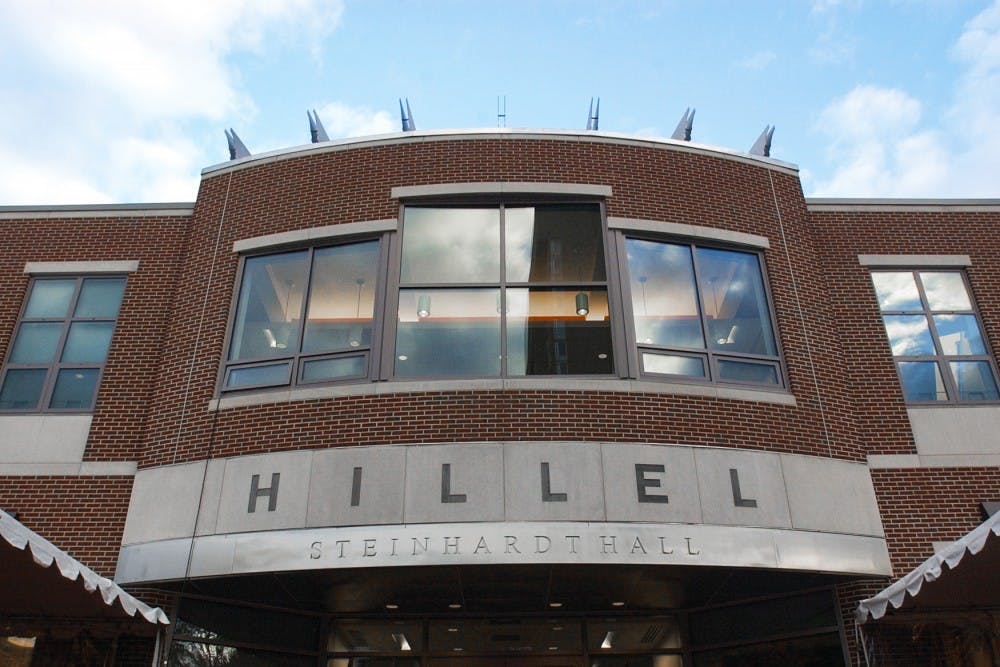
Penn Hillel, the branch of Hillel International that serves Penn’s majority Jewish community, has never been an inclusive Jewish organization.
The talk of Israel on campus is underlined and structured by Penn Hillel. For Jews at Penn with claim to their American Jewishness or the Diaspora, Hillel thwarts this right to self-determination because it is insignificant in the face of Israel, the so-called singular Jewish home.
Penn Hillel is an organization for the Jews that are in positions of authority, and one that is not for the Jews that question it. Penn Hillel fragments the oneness of the Jewish people by means of indoctrination and status.
The Hillel Agenda: Pro-Israel Campus Programming and Donorship
For many Jews at Penn, the comfortable Jewish experience includes support for the State of Israel. Penn Hillel, like other Hillels operating at large campuses, toes the line with pro-Israel indoctrination. This programming is led by donors whose contributions are sizable — including the Maccabee Task Force Foundation (MTF), a far-right group that targets Jewish collegiate institutions. In the latest annual report issued by Penn Hillel, MTF issued a donation of an undisclosed amount of over $50,000 to support pro-Israel programming.
Besides Penn Hillel’s Birthright trips (sometimes framed as failed “peak experiences” in the course of a young Jew’s life) and Jewish fellowships, Hillel invests in outreach to Jewish students in the hopes of bolstering its pro-Israel membership. This investment manifests most explicitly in this year’s MTF Action Plan Guide, which will issue $137,500 to Penn Hillel to support free trips to Israel, various “Israel advocacy” training sessions for pro-Israel students, and coffee chats — informal dates, typically over coffee — between those pro-Israel students. In a similar case at McGill University in 2019, many independent Jewish student leaders were offered an all-expenses-paid trip to Israel with the intent of contorting the Palestine-forward, human rights-oriented Boycott, Divestment, and Sanctions (BDS) movement. The BDS movement, founded in 2005, encourages economic and legal criticisms of Israel because of its national presence, though some have pegged the movement as antisemitic because of the pressures specifically put forth against the Jewish state. With programming so entwined in Israeli nationalism and anti-Diaspora politics, Penn Hillel’s motto (“Where the Jewish Future Begins”) feels all the more deceptive. Discomfiting as it is, the place for a “de-Zionized” Jewish experience cannot exist in the rooms of Steinhardt Hall. Penn Hillel’s conflation of Zionism to Judaism infringes on Jewish pluralism and forges a path for the intra-Jewish vanguard, leaving anti-Zionist Jews in the dust.
Big donorship and alliances do not begin and end with MTF. The Jewish alum Ronald Lauder of the Lauder family, for whom Penn has named two buildings, has served as a top executive in various pro-Israel groups including serving as the president of the World Jewish Congress (WJC). WJC supports the majority-Zionist, antisemitism-battling Jewish on Campus student organization. Its student ambassadors have negated advocacy for Palestine and the importance of anti-Zionist Jewry. The Platt–Beren megafamily — who recently donated an undisclosed amount over $100,000 to Penn Hillel — can boast the eponym of the Platt Performing Arts House. As it goes, the big names and big money of the Penn Jewish world form an unspoken cornerstone of campus life: Because of their donations, the pro-Israel agenda becomes inseparable from Jewish campus life.
Diasporism, Galut, and Penn Chavurah
In the Old World history of Ashkenazim ( Jews with origins to Eastern Europe), anti-Zionist thought and practice have been espoused for as long as Zionism. Before the founding of the State of Israel in 1948, Bundism — a socialist, Diasporic thought — was a competing movement in the ideological forcefield of Jews in Eastern Europe, staking claim in the Polish lands while seeing Zionism as “escapism, playing straight into the hands of the antisemitic movements that sought to be rid of Jews completely.”
Though Bundism diffused, its tenets of social justice and progressive Jewish leanings remain, especially among Jewish students. Penn Chavurah, founded in 2021, operates as a collective for the disillusioned — for those who reached an impasse with Penn Hillel denoting itself as an “all-inclusive” organization. With an outlook infused in the Diaspora and away from Israel, Chavurah supports a Jewish experience untethered from nationalism, allowing Jewish students to consider themselves as more than “potential Israelis.” For Chavurah, the focus of Jewish communal life goes beyond nation-state practices and indoctrination.
The Hebrew term galut (in Yiddish, goles; in Ladino, also galut) refers to either the Diaspora or the more devastating “Exile,” rooted in the belief that the Jews have become flung to various parts of the globe, becoming distant from the redeeming Holy Land of Israel. While galut is formed out of a longing for Israel, it departs, also, from this tradition of longing. While all Jews at Penn share the galut experience, Diaspora is denoted as uncomely — as the malformed precursor to Zionist understanding. To Zionism, galut is detestable and strange; to anti-Zionism, galut is the creation of interesting, and irreversible, Jewish world cultures. If Hillel is going to host a talk with a Holocaust survivor, it will find one that made aliyah (migrating to Israel, a tenet of Zionism) and not from the rest of the world. If Hillel is going to teach a language workshop, it will be Modern Hebrew and not the Diasporic Yiddish or Ladino. And if Hillel is going to contend with its connection to Israel, it will be through Israel Week awareness and not discussing with Palestinian or Arab student groups. Hillel believes that in making Zionism, the Diaspora must be uncelebrated and erased.
Conclusion
At Penn Hillel, you are asked to reconsider your final Jewish form as “Judean” or “Maccabean” or “Canaanite” — undevoted to the Ashkenazi, Sephardic, or Mizrahi origins and histories that have shaped all-encompassing Jewish livelihoods for millennia. With Israel as the goal, walking into the doors of Steinhardt as an anti-Zionist or a de-Zionized Jew means confronting an identity within an identity, that the Jew-as-other is yet another “other” among the Jewish student body.
As you guide yourself along Jewish life at Penn, Hillel will be an undeniable friend. You will enjoy kosher dinners with other Jews. You will enjoy Passover seders. You will go about the throes of Shabbat. But you will also be hunted down by a student coordinator. You will be probed about your connection to Israel. You will confront what it means to commune with other Jews.
Penn Hillel and Penn Chavurah represent the divide, the belief that Jews must always be separated. Above all, know that the Jews at Penn can be one people, even when they are not.
 Penn Disorientation Guide