
by Anonymous
Over the past three years, the COVID-19 pandemic has ravaged the world. While most marked signs of the pandemic have disappeared today, like online classes, shelter-in-place, and even masks to a large extent, the consequences of the pandemic continue to be long-lasting. The learning setbacks, economic pains, long-term physical and mental health effects, and number of lives lost are considerable.
For many, the pandemic was a breaking point: watching those with power and wealth profit while everyday people lost their jobs and their lives spurred many into radical action. Had the people leading our institutions taken the right steps to save lives instead of protecting their reputations and profits, thousands of lives could have been saved. Penn is no exception, and activists and community members have had to fight fiercely to hold the University accountable. Ironically, the University that played such a major role in creating the technology for the COVID-19 vaccine puts its very own community members at risk with their poor decisions.
Penn put West Philly communities at risk.
Penn’s inadequate response to the pandemic is an ongoing issue. Leading up to the Fall 2021 semester, the University’s announcements (or lack thereof) regarding plans to return to campus punctuated the months leading up to August and left students, staff, faculty, and community members confused and worried. Until mid-August 2021, the University planned to allow students to return to campus without discussing the real implications of such a situation for the community it neighbors.
Shortly before the University announced it would not have in-person classes in Fall 2021, Police Free Penn organized a Speak Out, giving voice to the concerns that Philadelphia residents had regarding Penn’s reopening. One of the speakers called Penn out for expecting people whose lives it deliberately put at risk to “trust” the University. “Trust us” is insufficient when it comes from an institution that has been harming and neglecting its workers, neighbors, and broader community for so many years.
A few months later, the University’s decision to bring back students in a hybrid format for the Spring of 2021 blindsided West Philly residents and left many concerned about their safety and frustrated with the university.
Throughout the pandemic, Penn continued to cause more harm. While the University provided free, unlimited COVID-19 testing for students and faculty at locations around campus, they did not allow West Philly community members access to these testing centers. After cases spiked on campus, Penn put local residents directly at risk by housing students who tested positive for COVID-19 in apartment complexes and hotels near campus where non-University affiliated community members lived. Allied Security Guards, subcontracted by the University, were also put at risk as they were forced to assist infected students.
Penn refused to enforce pandemic guidelines.
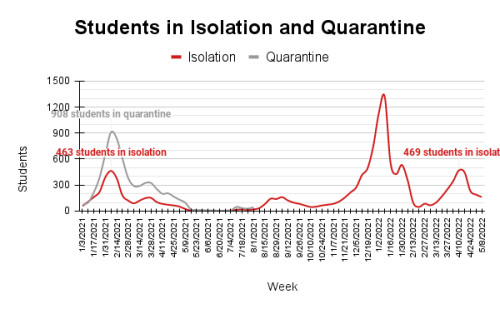
When Penn brought students back to campus in Spring 2021, they attempted to assuage concerns by introducing rules to limit the spread of the virus with the Student Campus Compact. However, students quickly realized that Penn would let students who violated the Compact go with nothing more than a slap on the wrist. As health officials warned us again and again throughout the pandemic that the virus was spreading through the student body primarily through unmasked indoor social events, many held by Greek Life organizations, you could still hear frats blasting music right on Locust into the night. Despite these glaring violations of the rules, Penn still refused to adequately enforce them, leading to hundreds of students, faculty, and staff contracting illness.
Penn used to require students, faculty, and staff to have received the COVID-19 vaccine and a booster shot, both of which they offered at free vaccine clinics in the past. But as of April of this year, the University ended the vaccination requirement. The University also previously required students to take PCR tests twice a week, then every other week, but now has no testing requirement. They have shut down nearly all of their testing sites. In April 2022, while Penn was still in the middle of its most recent surge of cases, the university removed their requirement for masking in indoor spaces on campus.
Moreover, Penn stopped updating their COVID-19 dashboard in 2022, no longer providing the public with data on the number of COVID-19 cases on campus. This gutting of COVID-19 safety measures rings highly irresponsible while there are still thousands of COVID–19 cases in the U.S. This move puts everyone in and around Penn’s campus at risk and poses an acute danger to disabled and immunocompromised students, faculty and staff, and West Philly community members.
As a representative of the Penn Disabled Coalition said, “The fact that Penn is not requiring testing for people who come to campus is really upsetting. People are traveling from everywhere, there is a strong chance that they will spread COVID to their roommates, their friends, their teachers. It honestly scares me that Penn has become so lax with their COVID policies.”The Disabled Coalition also released a statement condemning Penn’s current pandemic protocols and urging the university to (1) implement COVID-19 testing when students return after academic breaks, (2) reinstate required masking in classrooms, and (3) extend the use of the symptom tracker PennOpen Pass for voluntary use.
Penn carelessly treated their underpaid dining hall workers.
Roughly half of the dining halls on campus are operated by subcontracted workers under the corporation Bon Appetit. This demarcation between internal and external labor allows Penn to avoid accountability for these workers, blaming low wages or mistreatment on their faraway employer.
As the pandemic rapidly worsened in mid-March of 2020, Bon Appetit quietly revealed that they were laying off nearly all of their approximately 140 employees at Penn Dining in a mere two weeks, with the rest to follow shortly after. Due to their subcontracted status, these workers were not guaranteed the full pay and benefits that Penn-employed dining hall staff received for the rest of the semester.
Furthermore, the workers would be pushed into debt over health coverage fees. One worker calculated that she would not receive a single paycheck for the next semester due to healthcare debt owed to Bon Appetit. Students, workers, public representatives, and local organizations took action to push Penn to step up and use their enormous endowment to support workers, launching a petition, the social media Venmo campaign #PennPayUp, and multiple mutual aid efforts, emergency fundraisers, and more.
Finally, two weeks later, and the day before the workers were to be laid off, Penn announced that they would pay the workers’ salaries until the end of the semester. However, this move to cover salaries made workers ineligible to collect COVID-19 unemployment benefits.
As Penn planned on re-opening, dining hall workers communicated the exploitative bind that they found themselves in: they felt obliged to return to work because Bon Appetit threatened to terminate their unemployment benefits otherwise, but they were deeply concerned about what their exposure to thousands of returning students would mean for their health and that of their families.
Moreover, while Penn provided free COVID-19 screening tests for students when they opened back up, they did not provide dining hall workers access to those same resources, putting them and their families at risk. Only after several weeks and public outcry did Penn finally correct this oversight. This incident is only the latest in a long line of the callousness with which Penn has treated dining hall workers both before and during the pandemic.
As one anonymous dining hall worker said to the DP at the time, “It’s kind of like back in the day when my ancestors had to deal with ‘Blacks only’ bathrooms and ‘whites only’ bathrooms, this logic of, ‘you can’t use this testing site because you’re in that building. You’re not a part of the Penn family, even though you’re working on campus. You look right at the test site, but you better not step foot in here because you’re not welcome.”
At the same time that Penn was mistreating dining hall workers during the peak of the pandemic, then-President Amy Gutmann received a $3.7 million home loan, which was one of the largest loans ever issued to an Ivy League college administrator, according to recent reporting in the Daily Pennsylvanian (DP). President Gutmann was already the highest-paid Ivy league president with a nearly $4 million salary and took a pay freeze instead of a pay cut during the pandemic while four other Ivy League presidents took pay cuts of 20 percent or more.
These revelations only underscore how Penn cannot be trusted to put people over profits and safety over their bottom line unless pressed. The pandemic is not yet over. As we move forward, we must continue to be wary of Penn’s actions and statements. We must continue to urge them to make the right decisions, push them to support their communities, and protect and rely on each other when they refuse.
With the most recent spike in COVID-19 cases, it is important for you as an individual to take safety measures to protect yourself and those around you, especially since Penn won’t. The CDC recommends staying up to date with COVID-19 vaccines, improving ventilation and spending time outdoors, getting tested for COVID-19 if you have symptoms or have been exposed, staying home when you have suspected or confirmed COVID-19, avoiding contact with people who have suspected or confirmed COVID-19, and wearing masks on public transportation or if you are immunocompromised or live with someone who is.
 Penn Disorientation Guide