by Anonymous
Graduate students serve as teaching assistants, instructors, and research assistants that carry out operations essential to university life and experiences. However, despite the amount of work that graduate students do in order to ensure that undergraduate education and research goes smoothly, the University does not recognize them as workers. Because of this, graduate students can’t have a union or contract to protect them from exploitation, which includes insufficient healthcare, unstable funding and benefits, absence of workers compensation, susceptibility to abuse, and more.
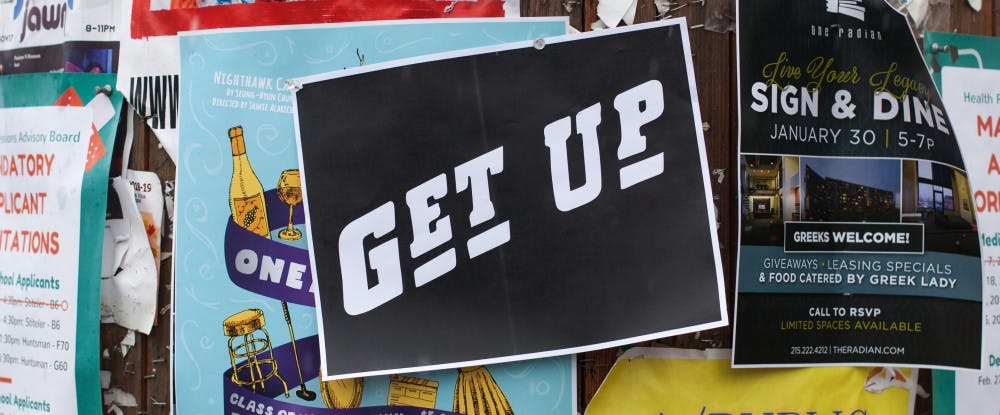
In Fall 2000, Penn graduate students formed GET-UP (Graduate Employees Together at the University of Pennsylvania). In Spring 2003, a majority of Penn graduate students voted in favor of unionization according to DP exit polls, but the results were never released. Penn’s administration appealed to the National Labor Relations Board (NLRB) to infinitely delay the release of the votes, meaning that Penn actively suppressed publicizing graduate students’ opinions on unionization.
In January 2004, a Bush appointee joined the NLRB, causing the board to become majority Republican. Soon after, on July 13, 2004, the NLRB ruled that graduate students at Brown were not employees. This ruling also applied to Penn graduate students, ending GET-UP’s attempts to unionize.
In Spring 2016, there were reignited calls for a graduate student union at Penn, resulting in the revival of GET-UP. When GET-UP went public with its revival, Penn tried to quiet calls for unionization by offering benefits to students such as free gym membership and a less costly dental plan. Despite graduate students pressing for free gym membership since 2011, Penn only gave graduate students this benefit once GET-UP became an organizing force once again, highlighting the administration’s attempt to “buy the support of PhD students against unionization,” as a former Ph.D. student noted.
Later that year, the NLRB reversed the Brown decision, ruling that graduate students are employees with the right to unionize. On May 30, 2017, GET-UP filed its petition to the NLRB to unionize. The University challenged the petition the next month, causing the petition to be delayed for 203 days — an unusually long period of time. On December 19, 2017, the NLRB ruled that graduate students at Penn would be able to vote on unionization. Former University president Amy Gutmann and former interim president Wendell Pritchett both sent emails to graduate students, discouraging them from voting for a union.
However, in February 2018, Penn graduate students withdrew their petition to vote for a union because the Trump-appointed NLRB could have used the vote to overturn the 2016 ruling that allowed graduate students to unionize.
As calls for unionization continue to build up, COVID-19 has only worsened the treatment of graduate students due to the University not recognizing them as true employees. With most graduate students largely surviving off of stipends, the pandemic brought grants and funding opportunities to a halt while also preventing graduate students from conducting career-essential research. Graduate students called for universal, one-year additional funding due to pandemic complications, a practice carried out by peer institutions such as Yale and Columbia. Rather than providing graduate students with livable funding, Penn instituted competitive, limited, means-tested emergency funds that were not open to all graduate students. Each of these funds required individual applications, unclear amounts of funding, and ambiguous timelines. Additionally, the University deprioritized graduate students in its university-run vaccination efforts in 2021 despite claiming that they were “essential researchers and workers” the year prior, highlighting the administration’s disregard for their labor and their safety.
The fight for graduate student unionization at Penn has spanned more than two decades. As the University continues to sabotage workers’ efforts to be protected and treated equitably, GET-UP continues its efforts for unionization through collective action, education, campaigns, and solidarity work. With Penn disregarding graduate students’ labor, time, and safety, it is important that undergraduate students stand in solidarity with their TAs, instructors, and research mentors as we approach the 2022-23 school year. The reason why Penn works is because of graduate students — and we need to support them in their fight for justice.
 Penn Disorientation Guide